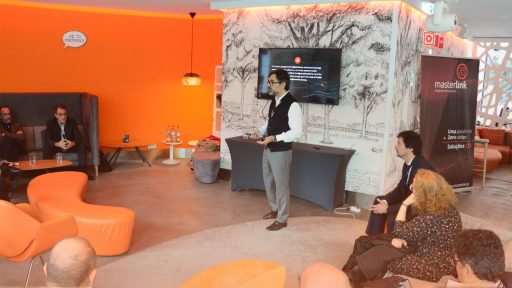
Project: Consumer Complaints and Disputes Management System, DG Consumidor. Developed by the Masterlink team in partnership with DG Consumidor.
The Directorate-General for Consumers is the entity in Portugal whose mission is to inform and alert citizens about all areas related to their consumer rights. And among those rights is the possibility of filing complaints whenever someone feels wronged.
Complaints do not have to be submitted only to the Directorate-General (DG) for Consumers. There are other entities with responsibilities in the area of receiving complaints, including local authorities, through the Municipal Consumer Information Centres (CIAC).
However, the complaints received at CIAC must be sent to this directorate-general. And it was this stage of the process—the communication between these two entities—that was modernised through the provision of an IT application for this purpose: the Consumer Complaints and Disputes Management System.
Teresa Moreira, Director-General of the DG for Consumers, explains that “as local authorities have their own responsibilities in terms of dialogue with consumers and in handling the issues raised by them, and they have to communicate that data to us, what we did was make an application available on the Consumer Portal, in an area reserved for them, where they can upload that information, eliminating the need to communicate on paper”.
Data harmonisation
But as consumer disputes can cover areas and take on very diverse forms, the creation of the application available online had to follow well-defined criteria. Therefore, “the fields to be completed by CIAC when entering data into the application were harmonised so that they can be compared reliably. There are items that are common and must be completed, such as the entity that is the subject of the complaint, the sector of activity, the location of the incident and the type of problem reported”.
In addition to entering the data from complaints they receive on paper, local authorities can report complaints directly in the application and attach the necessary documents in digital format. In this way, the entire process is online, recorded and accessible to the Directorate-General for Consumers, which has more direct access to the reality and can extract data more quickly.
For Teresa Moreira, this harmonisation is “essential to obtain an overall view of the consumer disputes that exist in the country, so that we can suggest some legislative or regulatory changes”.
However, this is a recent project and therefore does not yet have the participation of all local authorities that have CIAC. Of the 67 municipalities that have the service, only 45 already use the system. The objective now is to extend it to all CIAC and also to other entities in this area, such as consumer protection associations and sectoral regulatory bodies, which also receive complaints and grievances.
Understanding the reality
“This is a relatively recent project that we have been presenting to the local authorities that have CIAC, explaining how the application works and its advantages. And the reception has been positive because these applications are interesting. And it is easier to encourage a small local authority to communicate the data if it has ‘user-friendly’ tools”, she notes.
This positive response has also been supported, according to the Director-General for Consumers, by the guidance provided to local authorities. While there are technological partners for the development of the applications, when it comes to issues related to completing the online forms, local authorities have benefited greatly from the support of the Directorate-General for Consumers’ services.
In addition to the advantages for local authorities, the Directorate-General for Consumers also benefits from this modernisation and the move away from paper-based communication of complaints. “With this application we can more easily assess the complaints received. We do this every six months and then annually. And in this way we can get a picture of what is happening in the country. Check whether there is an increase or a decrease in complaints, which sectors are most affected, which companies receive the most complaints, etc. This data is very important because the Directorate-General for Consumers has been developing preventive communication actions since the beginning of this year, aimed not only at consumers but also at economic operators, to mobilise them around consumers’ rights”, explains Teresa Moreira.