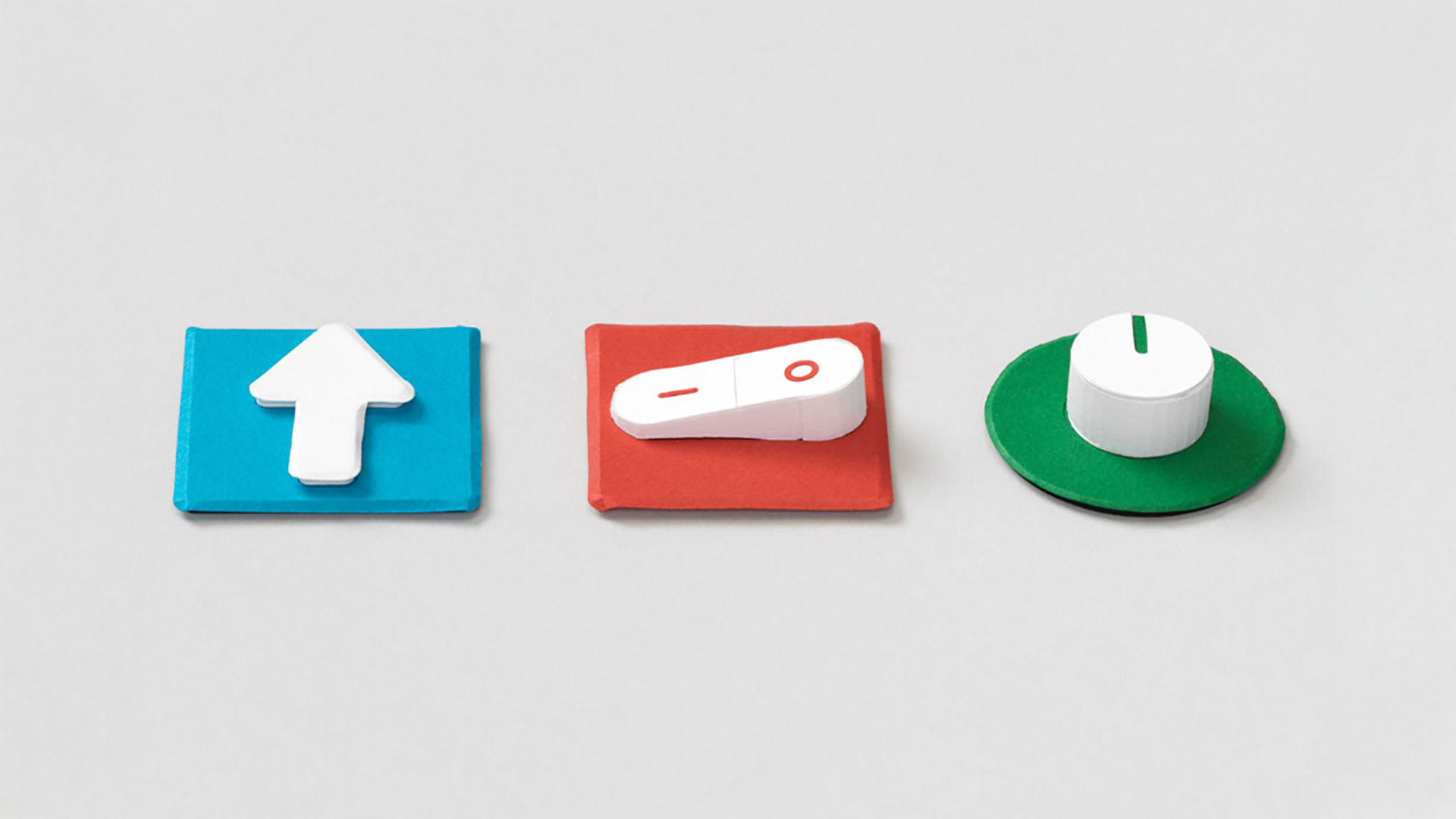
Google launched a very ambitious project, Project Bloks, through which it aims to help young children learn to program… without coding!
The idea is based on what Lego achieved as a mental translation into the physical construction of toys, although the result of children fitting together the “bloks”—as Google calls the pieces—may ultimately be a robot drawing on paper, or a speaker producing sound. In computing, Google follows in the footsteps of Seymour Pepper, a pioneer of Artificial Intelligence and the father of Logo, a programming language dating back to the late 1960s that was based on the graphical construction of figures through very simple instructions. At the time, this way of interacting with the computer aimed to attract younger audiences to the revolutionary field that was emerging, while simplifying the programming process and delivering immediate and, for the era, spectacular results.
Google brought these two “pieces” together—the vision of Seymour Pepper and Lego’s logic—and created Project Bloks. But what is the relationship between Project Bloks and Masterlink?
Programming without coding with the Masterlink Platform
All the software we develop runs on a platform, built from the ground up by Masterlink and bearing its name, where applications are built—literally and visually—with minimal use of code. Pieces are genuinely assembled, which are nothing more than form fields, stages that forms go through after submission, and even complex reports. Validations, data copying, restricting field visibility, or managing application security are actions that consume hours and hours of coding, but on the Masterlink Platform they are easily managed without a single line of code—where the mouse is what truly does the work.< p>The conceptual similarities between what we do at Masterlink and what Google—albeit for a different audience—advocates with this project do not end here. For years, Masterlink has encouraged our employees and clients that, over time, code will become increasingly less necessary; but more than that, that this core software, which we improve every day, fundamentally serves to provide autonomy in application creation!
The future of software development
We conclude with a quote from Adam LaGreca—one of the contributors to the IT Techcrunch news portal—about this recent Google project, which also summarises our (daily) sentiment regarding what we aim to achieve:
“Writing code will become less and less necessary, making software development more accessible to everyone. This will allow people to solve new and unique problems for themselves, and true software engineers will continue to find ways to empower others through various platforms.”