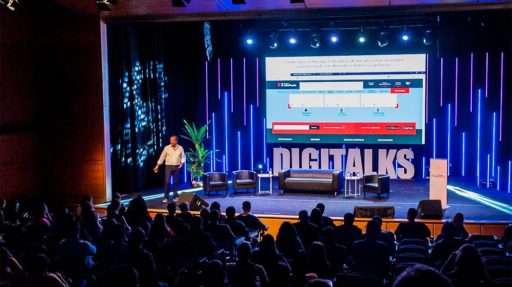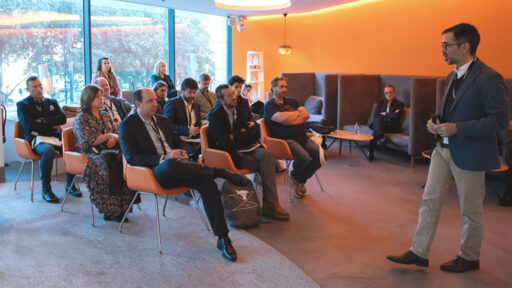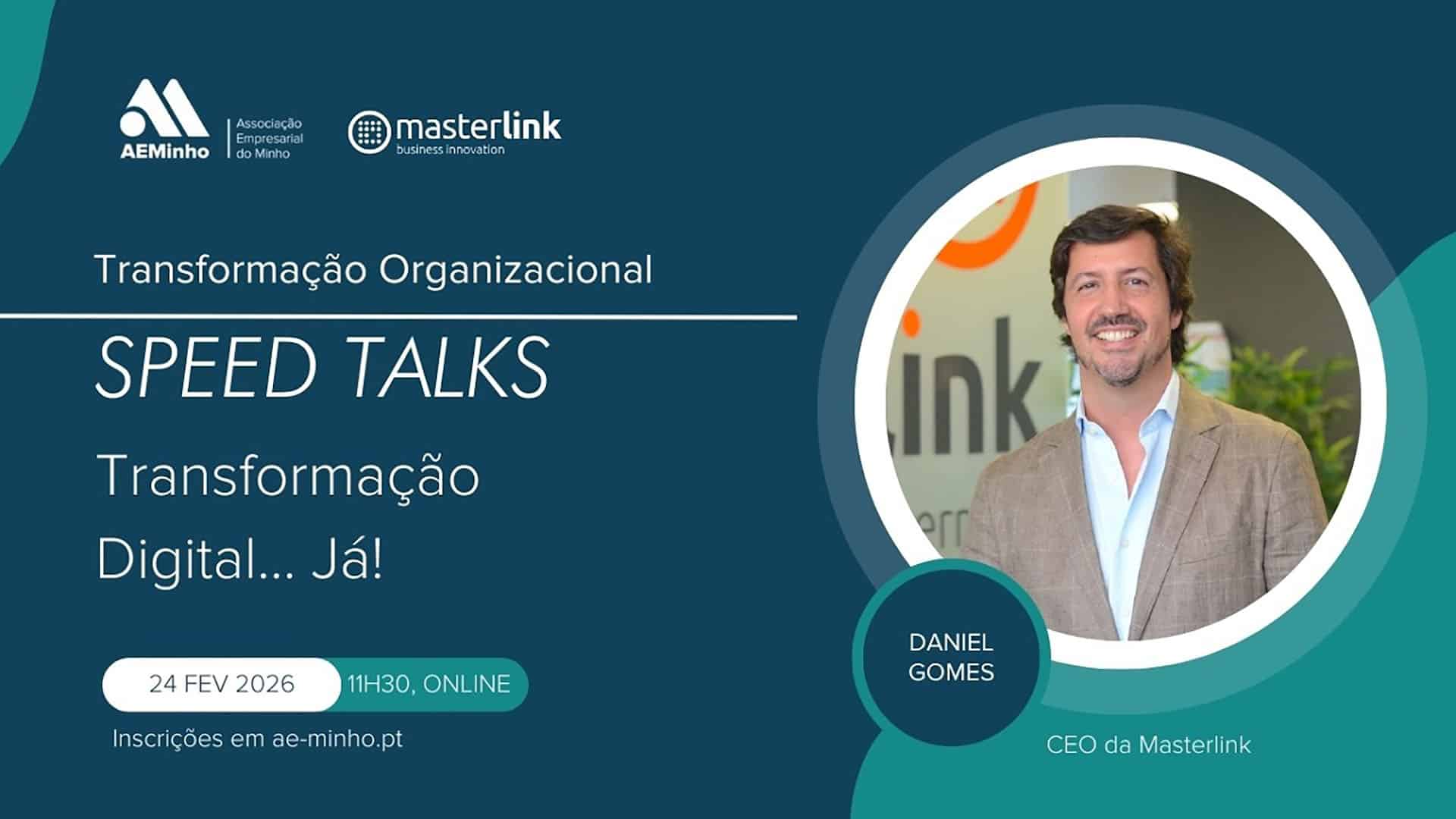
Masterlink attended the latest edition of the Associação Empresarial do Minho Speed Talks, with a session dedicated to the theme “Digital Transformation… Now!”, led by Daniel Gomes.
Throughout the presentation, Masterlink’s CEO addressed one of the main challenges faced by Portuguese companies: the difficulty of turning digital ambition into real execution. Despite investments and strategies defined at national and European level, many organisations continue to face obstacles such as a lack of specialised resources, fragmented systems, and reliance on external development.
“Most companies do not fail due to a lack of ambition, but due to a lack of execution capability.”
Digital transformation in companies: why execution fails
The session highlighted that many digital transformation projects fail not due to a lack of technology, but because of an implementation model based on isolated solutions.
Using multiple systems by department, without integration and without an end-to-end view, often leads to:
- Data fragmentation
- Inconsistent processes
- Information redundancy
- Difficulty in decision-making
This scenario limits operational efficiency and undermines the real impact of digital transformation in companies.
A no-code Platform as the foundation for cross-functional digital transformation
The approach presented by Masterlink is based on building a shared digital foundation, supported by a no-code platform.
This platform makes it possible to develop tailored technology solutions, adapted to the specific needs of each organisation, and applicable across different areas of the business.
By enabling internal teams to create and evolve solutions without the need for programming, the platform contributes to:
- Reduced reliance on external suppliers
- Faster development speed
- Better alignment with real business needs
- Continuous evolution of systems
Real-world cases show how to accelerate digital transformation in companies
During the session, several concrete examples of organisations were presented that were able to improve their efficiency through process automation and data structuring.
The cases showed that it is possible to:
- Significantly accelerate the execution of digital projects
- Integrate existing systems, avoiding data duplication
- Automate critical processes with a direct impact on operations
- Improve decision-making based on structured information
These examples reinforce that digital transformation in companies depends more on the implementation model than on the available technology.
Artificial intelligence in companies requires a structured foundation
Artificial intelligence in companies was also one of the session’s central topics, presented as a capability accelerator.
However, it was emphasised that its impact depends directly on the quality of the existing foundation.
“Artificial intelligence does not create structure. It amplifies what already exists.”
Effective use of AI requires:
- Organised data
- Structured processes
- Consistent architecture
Without these elements, artificial intelligence can amplify inefficiencies instead of generating value.
Digital transformation is an organisational capability, not an isolated project
The session ended with a clear message: digital transformation in companies should not be seen as a one-off project, but as an ongoing capability.
Identifying manual processes, slow decisions, or critical dependencies is the first step towards starting a structured transformation.